Canary vs Blue Green: how to eliminate downtime
- March 2026 |
- 03 Mins read
Nowadays, service availability is no longer an added value, it is a fundamental requirement. We are connected 24/7, and the concept of a nightly “maintenance window” is either disappearing or already extinct. While your local customers sleep, your partners on the other side of the world are already working with your product. A single minute of downtime can translate into significant financial losses and a drastic reduction in user trust.
This is why, in our daily work, we strive to transform software releases from risky events into mundane, invisible processes. To achieve this operational continuity, the two primary strategies revolve around Blue Green or Canary Deployment.
The importance of a Stateless architecture
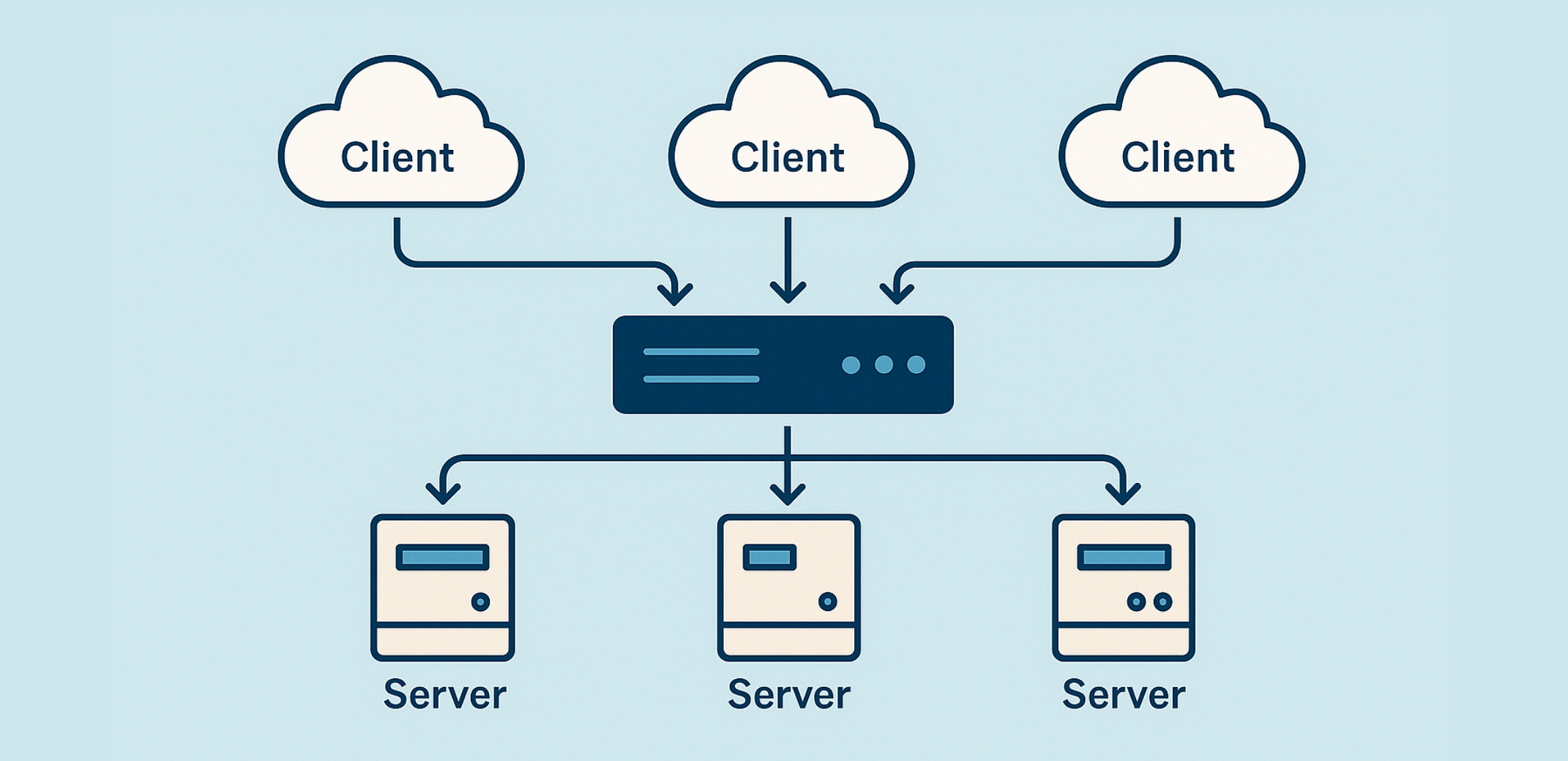
Before analyzing the strategies, we must establish a fundamental premise. To eliminate downtime, that annoying window of time where someone manually intervenes on servers to update them, the application must be designed correctly. By “correctly,” we mean a perfectly crafted stateless architecture. Being stateless means that every server node can handle any request independently, and the database manages changes non-destructively (using schema migrations compatible with previous versions).
Blue Green and redundancy
Blue Green deployment is a release strategy that utilizes two identical but separate production environments. The Blue Environment is the version currently in production, serving live traffic, while the Green Environment is the new version where the update is deployed.
While the Blue environment continues to handle users, the engineering team can test the new version in the Green environment in total isolation. Once stability is verified, the Load Balancer redirects all traffic to the Green environment.
The main advantage is safety. If a critical bug is spotted after the switch, traffic can be instantly routed back to the Blue environment. It acts as an instant “parachute” that zeroes out the risks of complex releases. However, it requires double the hardware (or cloud) resources, as both environments must be ready to handle the full load.
Canary and incremental rollouts
If Blue Green is an ON / OFF switch, Canary deployment can be seen as a dimmer switch. This technique is named after the canaries used in coal mines: if the canary survived, the air was safe for the miners.
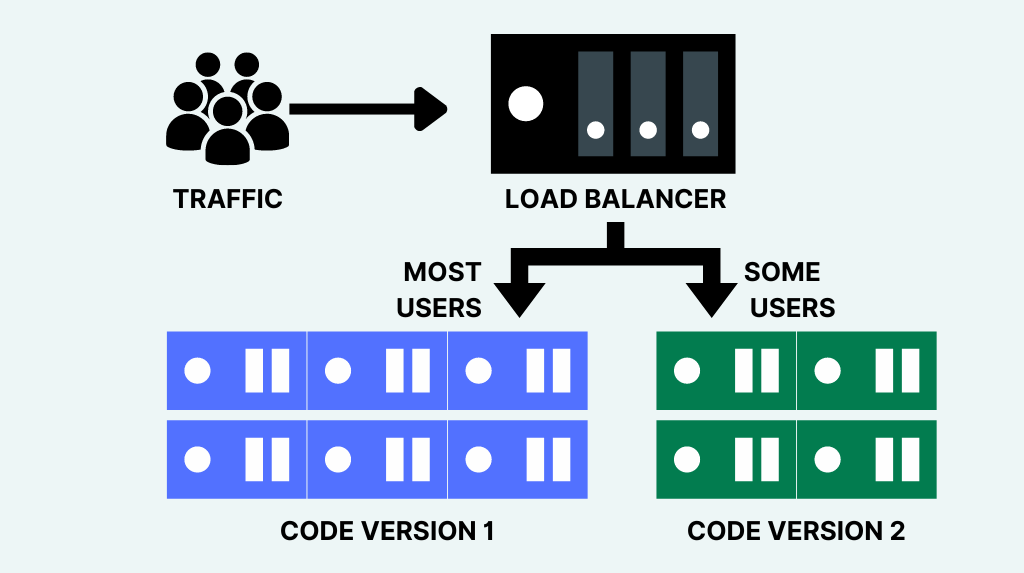
In this scenario, the new software version is initially released to only a small subset of users, for example, 5%.
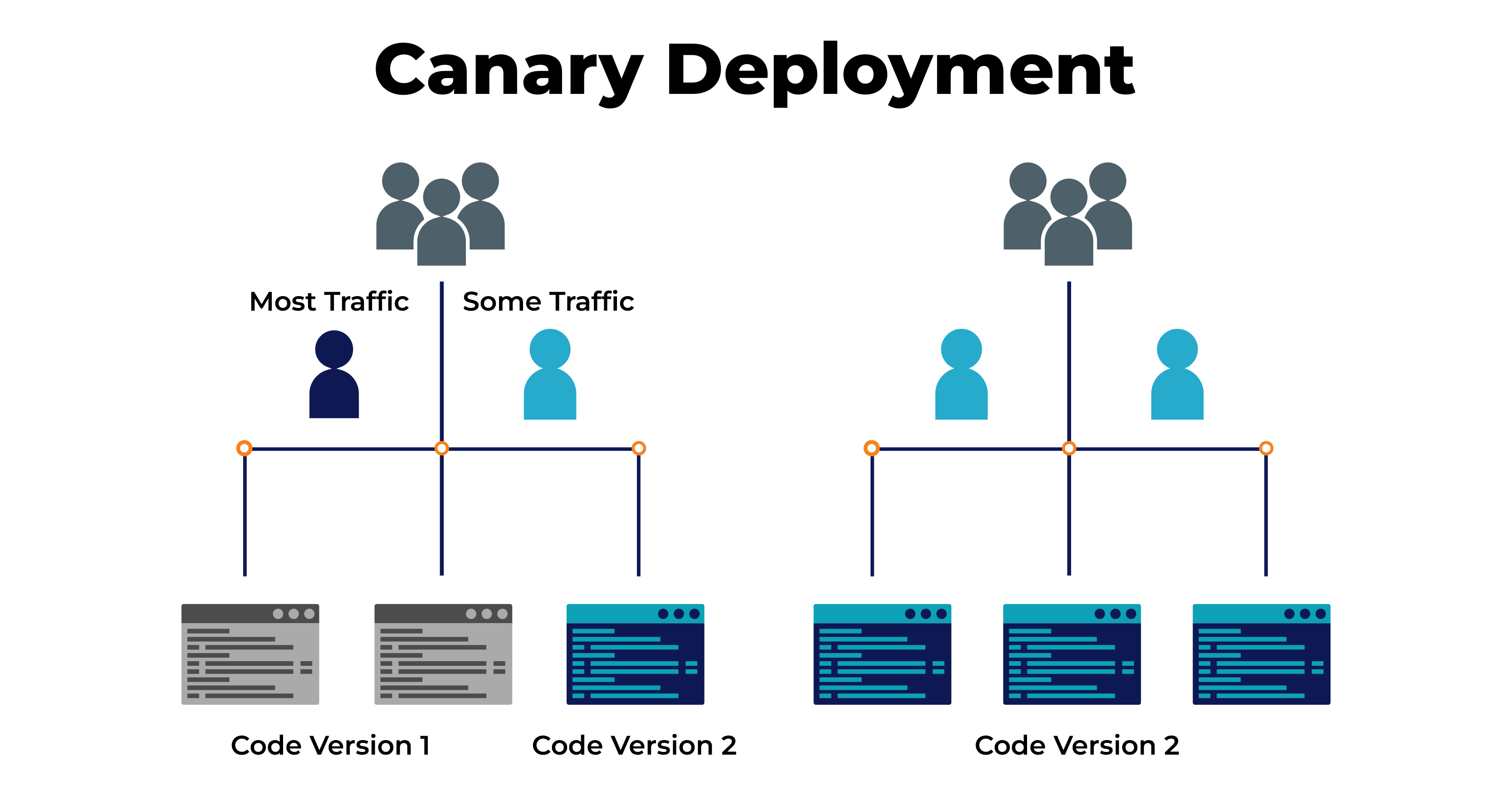
The Canary process occurs in phases: in the first, the Initial Release, a tiny fraction of traffic is routed to the new servers. This is followed by Monitoring, where metrics such as response times, 500 errors, and user feedback are analyzed. If the data is positive, the Gradual Rollout increases the percentage to 10%, 25%, 50%, and finally 100%.
This is the preferred strategy of tech giants because it allows for testing new features on real users with extremely low risk. If the “canary” encounters issues, only a small fraction of users will be affected, allowing the team to fix the bug before the global release.
So, which path to follow?
In our work, we help our partners choose the best strategy based on their specific needs:
| Feature | Blue Green | Canary |
|---|---|---|
| Rollback Time | Instant (Traffic Switch) | Fast (Shutting down the Canary) |
| Infrastructure Cost | High (Double environment) | Optimized (Modular) |
| Complexity | Moderate | High (Requires advanced monitoring) |
| Real User Testing | No (Tested in isolation) | Yes (Specific target or percentage) |
You don’t need to be a multinational corporation to implement CI/CD pipelines. With tools like Docker, Kubernetes, and modern Cloud services, even a startup can aim for “zero downtime” standards.
Implementing these strategies is not just a technical choice; it is a business decision that protects your revenue and your reputation. The question is no longer “if” you should update, but “how” to do it without anyone noticing.