Claude Design and Pomelli: the brand as context an AI can read
-
- AI |
- October 2026 |
- 05 Mins read
Anyone who has tried using a generative model to produce visual material knows the exact point where the magic runs out. The first screen arrives within seconds and is genuinely impressive, the second arrives just as fast but looks like it belongs to a different company, and by the tenth attempt more time has gone into explaining what the brand colours are, which tone to use and why that font is wrong than would have been needed to open a design tool and do the whole thing by hand. The problem is not the quality of the generation, which by now is taken for granted, but the fact that every request starts from nothing and that the identity of a product has to be reconstructed in words every single time. Over the past year two products born in very different settings have tackled this problem in the same way: Pomelli, the Google Labs tool built for small businesses, and Claude Design, the Anthropic Labs tool built for product teams. Placed side by side, they say something that goes beyond either of them.
Context before the prompt
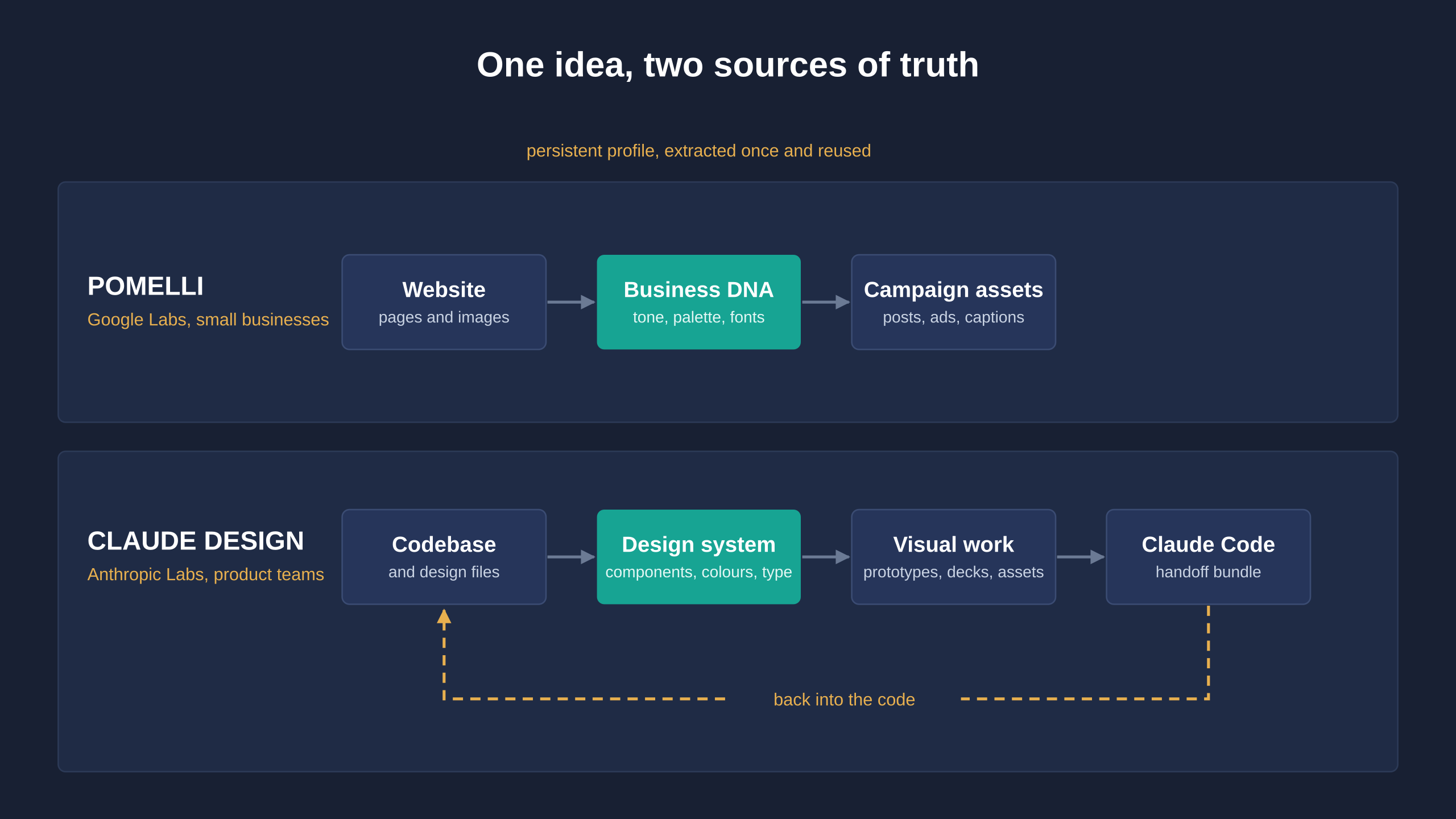
The shared idea is simple to state. Instead of asking the person using the tool to describe the visual identity with every request, the identity is extracted once from a source that already exists, made explicit in a readable and editable structure, and from then on it becomes the implicit context of everything that gets generated. Consistency thus stops depending on one person’s memory and patience and becomes a property of the system. It is the same principle by which a software project extracts configuration from code, and it is worth noting because it is an architectural choice before it is a product choice. The two tools differ mainly on one point, namely where they read that identity from.
Pomelli and the Business DNA
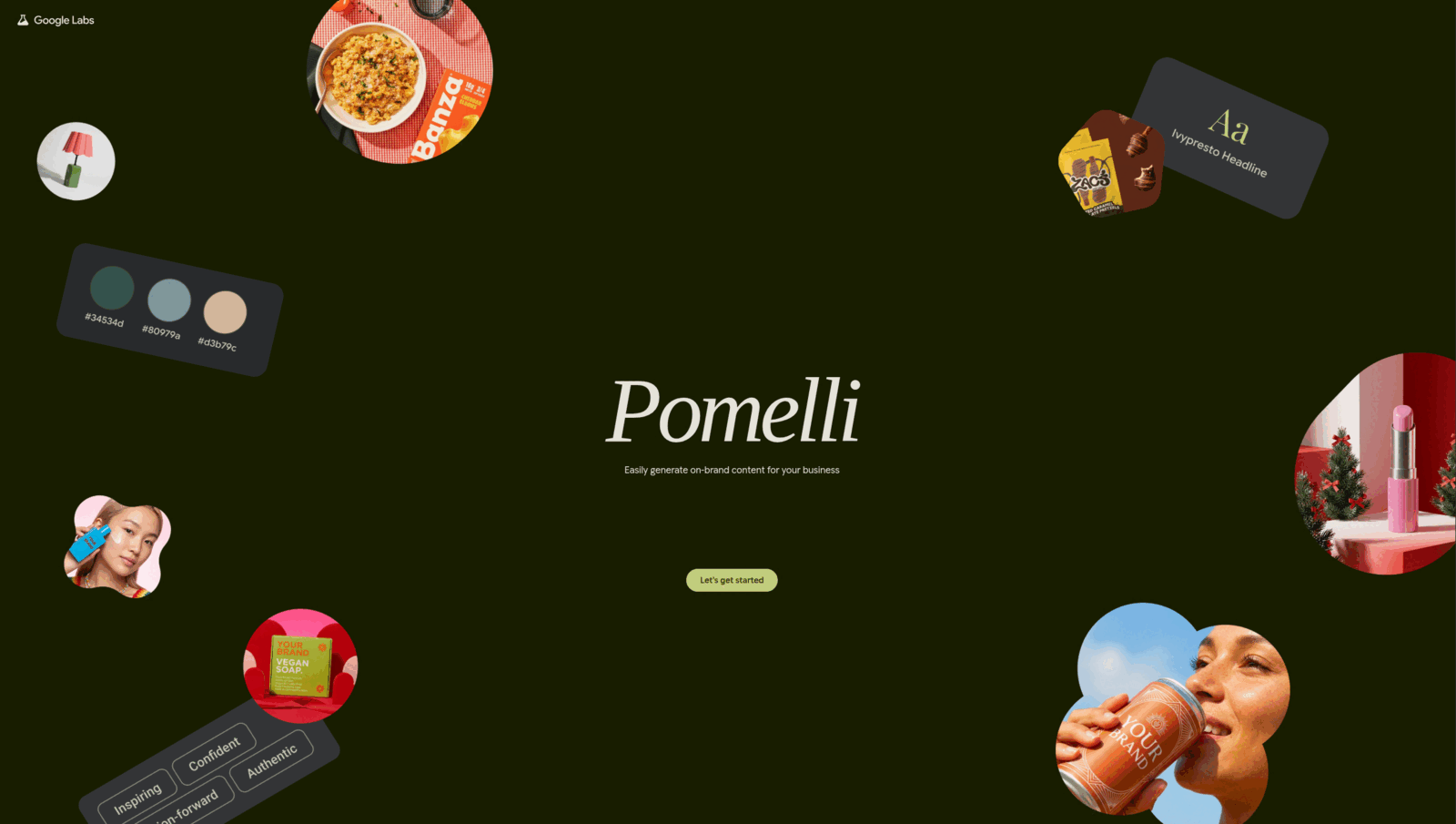
Pomelli, released by Google Labs together with Google DeepMind at the end of October 2025, starts from the address of a business website. It analyses the site together with the images it finds there and derives what it calls a Business DNA, a profile that gathers the tone of voice, the colour palette, the fonts, the visual style and the way the business talks about itself. On that basis it suggests campaign ideas, or accepts a goal described in plain words such as a launch or a seasonal promotion, and generates images with text for social media, the website and ads, complete with captions. In February 2026 it gained Photoshoot, which takes a product shot taken on a phone and rebuilds it as a studio photograph using the Nano Banana 2 model, and in March availability expanded from the original four countries to more than one hundred and seventy. Its audience is clear: the small business that has a website but no designer, for which the bottleneck was never layout but time.
Claude Design and the design system read from code
Claude Design, introduced by Anthropic Labs in April 2026 on top of Claude Opus 4.7, applies the same idea to a different audience. During onboarding it reads the team’s codebase and design files and builds a design system from them, with components, colours, typography and spacing rules, which is then applied automatically to every project. Work can start from a description, from Office documents, from a codebase or from elements captured from a website, and produce interactive prototypes, slide decks or campaign assets. Revision happens through comments on individual elements, direct text edits and controls that adjust spacing, colour and layout live. On the way out the work exports to PDF, PPTX, HTML or Canva, or gets packaged into a bundle handed to Claude Code for implementation. The testimonials gathered at launch focus precisely on the reduction in attempts, with Brilliant describing complex pages that went from more than twenty prompts in other tools to just two.
Two sources of truth, the same insight
The difference between the two products lies entirely in the source from which the identity is extracted. For an ice cream shop or a neighbourhood store the only structured representation of the brand is the website, and that is where Pomelli goes looking for it. For a company that builds software the most faithful representation is neither the website nor the brand manual, which goes stale the moment it is approved, but the code, where colours are variables, components have names and spacing follows a scale. Claude Design picks that source and closes the loop in the other direction, because the bundle it hands to Claude Code brings the design back into the code it started from. The design system thus becomes an exchange format between people and agents, read at the beginning and rewritten at the end, rather than a document to consult.
This has a practical consequence for anyone who writes code. A frontend with explicit design tokens, consistent components and sensible names is no longer just easier to maintain, it is also a better input for the tools that will generate interfaces and material from it. A project in which the same blue appears in seven different shades scattered across its stylesheets will produce a confused design system, and that confusion will spread into every prototype, deck or page generated from it.
What remains beyond the tools
Neither product replaces a capable creative direction, and anyone who uses them with that expectation will be disappointed. The right yardstick is not a comparison with the work of a studio, but the ratio between the time spent and the first usable result, and that is where the gap with what existed before really shows. The idea that remains is the persistent profile. Extracting the identity of a product into a readable and reusable structure solves the problem in a simple way, and the fact that it works both for a small local business and for a product team suggests that the advantage is shifting towards whoever already has an explicit, orderly and machine readable identity.
To learn more: https://labs.google.com/pomelli/about/